


Chinos vs. Trousers vs. Jeans: What's the Difference?
Chinos, trousers, and jeans differ in fabric, formality, and occasion. A guide to which one fits work, casual, or in-between.

Chinos vs trousers vs jeans is really a question of formality. Jeans, chinos, and trousers sit at three different points on the same formality spectrum. Jeans are the most casual of the three, trousers the most formal, and chinos occupy the middle ground, more polished than jeans without reaching the structure of a suit trouser.
The chinos vs trousers vs jeans difference isn't only visual. Fabric, construction, and even how each pair is expected to fit all shift across the three, which is what this guide breaks down.
Chinos vs trousers vs jeans: what's the construction difference?
Jeans are made from denim, a heavy cotton twill woven with a distinctive diagonal rib and traditionally dyed indigo. The fabric is durable and casual by nature, and even a dark, unwashed pair still reads less formal than chinos or trousers.
Chinos use a lighter cotton twill, flat-fronted with pockets set into the side seam, giving a cleaner line than denim without the structure of a proper trouser. Trousers are typically wool, wool-blend, or a fine cotton, cut with more structure through the waist and leg, often with pleats or a crease pressed into the front, and are built to pair with a blazer or suit jacket in a way neither chinos nor jeans are designed for.
“Chinos sit between jeans and trousers, and that's their whole appeal.”
— The short version
How do chinos, trousers and jeans differ in fit?
Fit is where the three drift apart most once they're on. Jeans are usually cut closer through the seat and thigh, and the heavier denim moulds to the body over time. Chinos sit lighter and cleaner, typically in a slim or straight leg. Trousers carry the most structure: a defined waist, often a pressed front crease, and enough room in the leg to drape rather than cling.
A quick test is the hem. If it stacks into folds over your shoes, the pair reads casual whatever the fabric. A clean hem with little or no break is what makes chinos and trousers look deliberate.
Which one fits which occasion
|
Pant type |
Best for |
Fabric |
Formality |
|---|---|---|---|
|
Jeans |
Weekend, casual outings |
Denim |
Casual |
|
Chinos |
Smart-casual, travel, business casual |
Cotton twill or stretch blend |
Middle |
|
Trousers |
Formal events, suiting |
Wool or wool-blend |
Formal |
All In Pants isn't a chino. It's made from Flexknit™, a 100% polyester, four-way stretch, non-iron warp-knit fabric, rather than cotton twill, with denim-like styling and seven pockets that add cargo functionality without looking like cargo pants. But it's built for the same smart-casual space chinos fill on this table: clean enough for the office, wrinkle-resistant, and comfortable through a commute or a flight.
What to wear with chinos, trousers and jeans
Pant type |
Tops |
Shoes |
|---|---|---|
Jeans |
Tees, overshirts, casual shirts |
Sneakers, boots |
Chinos |
Polos, oxford shirts, knitwear, unstructured blazers |
Loafers, clean minimal trainers, desert boots |
Trousers |
Tucked-in shirts, blazers, suit jackets |
Leather shoes, loafers |
Chinos are the only one of the three that moves comfortably in both directions: down to a tee and sneakers for the weekend, or up to a blazer for a client meeting. That flexibility is why they're the default middle option in most wardrobes.
Chinos vs trousers vs jeans: which colours work best?
Jeans are most versatile in indigo and darker washes; lighter, faded washes read more casual. Chinos work hardest in khaki, navy, olive, stone and grey, colours that pair with almost any shirt or polo. Trousers lean towards charcoal, navy, grey and black, the shades that sit comfortably under a blazer.
If you're building from scratch, one dark pair of jeans, two chinos in khaki and navy, and one charcoal trouser covers most situations a working week throws at you.
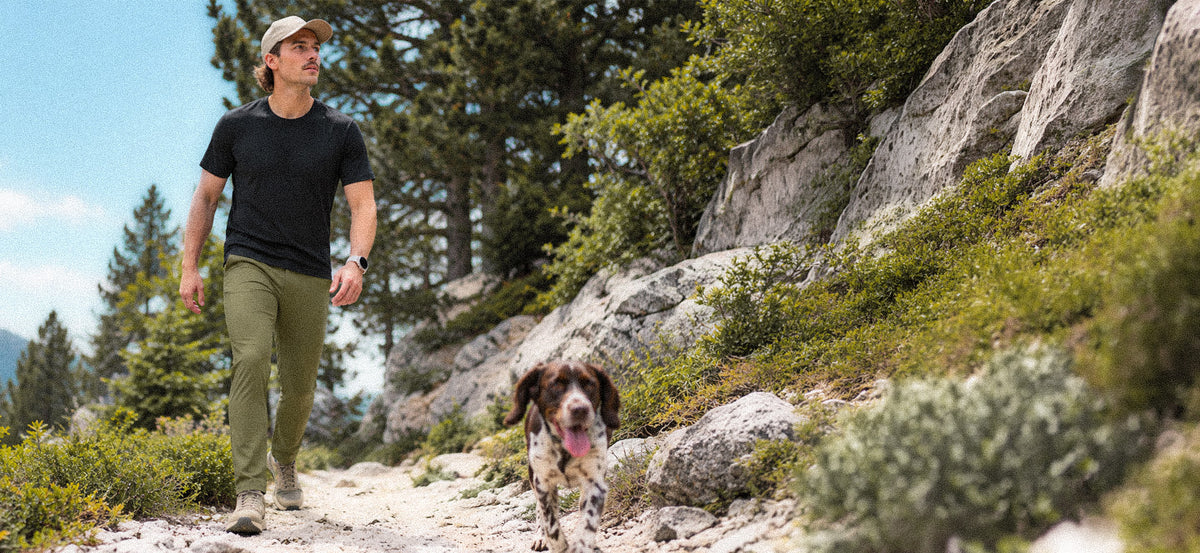
All In Pants in Flexknit™: four-way stretch, from the trail to the meeting room.
Chinos vs jeans, which is better for work specifically?
Chinos are the safer default for most office environments, since they read as more deliberate and put-together than jeans regardless of how good the jeans' fit or quality is. Denim, even dark and unworn, still carries a casual association many workplaces don't fully accept.
Jeans can work where the dress code is genuinely casual, but chinos clear more workplaces without needing to check the policy first. If the environment is ever in doubt, chinos are the lower-risk choice.
Chinos vs trousers vs jeans in Indian weather
In heat and humidity, fabric weight matters more than the label on the pant. Heavy denim traps heat and is slow to dry, which makes jeans a hard ask through a humid summer or the monsoon. Cotton chinos breathe better but crease easily and stay damp once they get wet. Wool trousers are rarely practical outside air-conditioned offices or the cooler months.
If your day mixes a commute, an office and an evening out, lighter stretch fabrics are worth a look. They dry faster and hold their shape better than cotton, though they trade away some of the classic cotton feel. Whichever you choose, lighter colours and a slightly roomier cut help with airflow on hot days.


