


What Is a Polo Shirt? A Complete Buying Guide
A polo shirt is a collared, button-placket knit top, usually in pique or jersey fabric. A guide to sizing, fabric differences, and building a polo wardrobe.

What is a polo shirt? It's a collared, buttoned-placket top, traditionally knitted in a textured pique fabric, that sits between a t-shirt and a formal shirt in how dressed up it looks. The collar and placket are what separate it from a t-shirt, while the knit construction keeps it more relaxed than a woven dress shirt.
This guide covers where the polo actually comes from, the fabric differences worth knowing before buying one, and how to build fit and wardrobe decisions around it.
What is a polo shirt, and where does it come from?
The polo shirt was developed for tennis in the early 20th century, designed to replace the stiff, long-sleeved dress shirts players had worn until then. The soft collar, buttoned placket, and shorter hem all solved a practical problem: freedom of movement during a match, which is why the garment reads as sporty even now, decades after it moved into everyday and office wear.
If you're asking what is a polo shirt rather than a collared tee, the two or three-button placket and ribbed collar and cuffs remain the defining features. Strip those away and what's left is closer to a collared t-shirt than a genuine polo.
“A good polo sits close at the chest and never pulls at the buttons.”
— The fit check
Polo shirt vs t-shirt vs shirt: what's the difference?
Polo shirt |
T-shirt |
Button-down shirt |
|
|---|---|---|---|
Collar |
Soft, ribbed or knitted |
None |
Structured, woven |
Fastening |
2-3 button placket |
None |
Full button front |
Fabric |
Knit (pique or jersey) |
Knit (jersey) |
Woven |
Formality |
Smart-casual |
Casual |
Smart-casual to formal |
The polo borrows the comfort and stretch of a knit from the t-shirt and the collar from the shirt. That mix is why it works in more settings than either: smart enough for most offices, relaxed enough for a weekend.
Pique vs jersey, which polo fabric is better?
Pique knit is the traditional polo fabric, woven with a raised, waffle-like texture that stands slightly off the skin, giving it structure and better breathability. Jersey knit is smoother and closer-fitting, borrowed from t-shirt construction, and drapes softer but holds its shape less well over repeated wear.
|
Fabric |
Texture |
Breathability |
Structure |
|
Pique |
Raised, waffle-like |
Better |
Holds shape longer |
|
Jersey |
Smooth, close-fitting |
Lower |
Softer drape, less structure |
Beyond fabric type, check three things before buying: fabric weight, since a lightweight cotton pique breathes better in heat but wrinkles faster than a heavier blend; collar construction, where a ribbed, structured collar holds up to washing better than an unstructured one; and any added finish, such as UV protection or moisture-wicking, which matters if the polo needs to perform outdoors or in humidity rather than just look sharp indoors.
How should a polo fit, and how many should you own?
The chest should sit close without pulling at the buttons, sleeves should end mid-bicep, and the hem should land at or just below the hip. Stepwise Polo and Off Duty Polo both fit this brief. Stepwise Polo is made from Zephyrmax™, a cotton and Coolmax® polyester blend, with a ribbed collar that holds its shape and doesn't curl. Off Duty Polo uses a classic pique knit in a cotton-heavy Sorona® blend, with a ribbed collar and armbands, a side slit for easier movement and UPF 50+ protection for outdoor wear.
For how many to own, 5 to 7 is a reasonable working range for most wardrobes, enough to rotate through a work week without repeats, plus a couple in stronger colours for weekends. Start with neutral colours such as navy, white, and grey before adding anything bolder, since those repeat more easily without being noticeable.
Is a polo shirt business casual?
Yes, in most offices that run business casual. Choose solid, muted colours and a collar that holds its shape, and keep logos small. Tucked into tailored trousers or chinos, a polo reads smarter; untucked, it works with chinos or dark jeans as long as the hem sits at the hip. A faded colour or a curling collar is usually what tips a polo from office-ready to off-duty.
How to style a polo shirt
With chinos and loafers for a smart-casual office or dinner.
With dark jeans and clean sneakers for the weekend.
Under an overshirt or unstructured blazer when evenings cool down or the setting is a step more formal.
With tailored shorts for holidays and warm-weather plans.
Leave the top button undone for an easy look. Buttoning it all the way up is a deliberate style choice that works best with a slim fit and no layers.
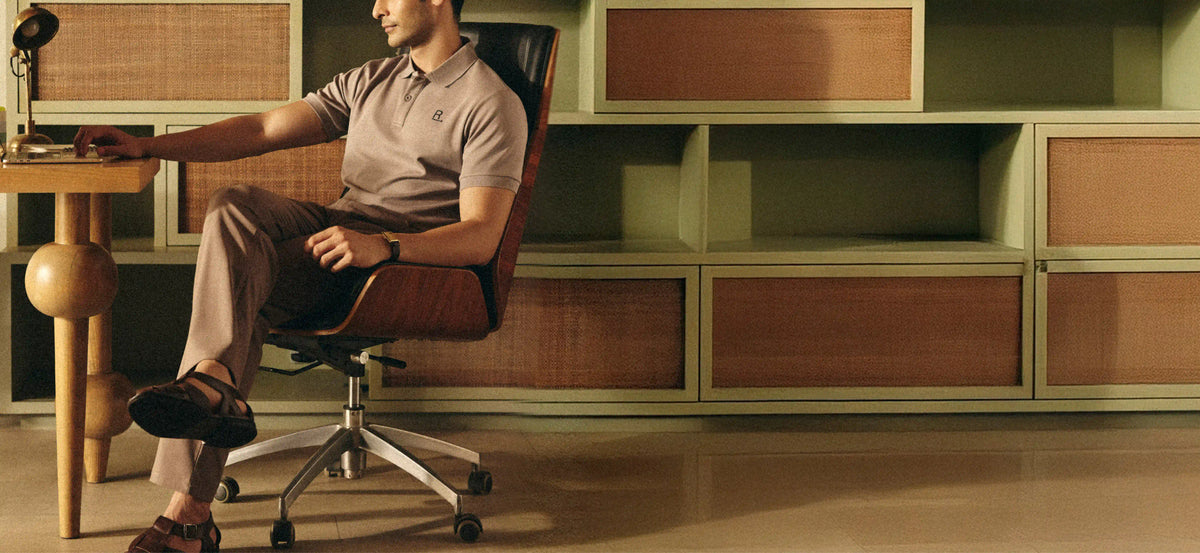
The Stepwise Polo in Zephyrmax™, with a collar that holds firm.
How to care for a polo shirt
Wash in cold water with similar colours, turning the polo inside out to protect the surface of the knit. Dry it flat or on a line in the shade rather than hanging it wet by the shoulders, which can stretch the knit out of shape. Check the care label before ironing, since many performance blends don't need it, and use a low heat setting if they do. Done right, a well-made polo keeps its collar and colour for years of regular wear.


